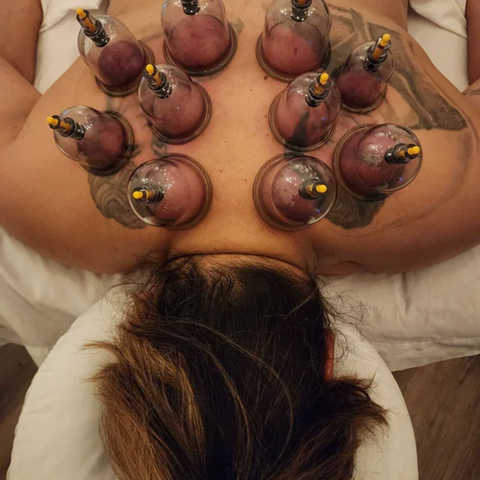
Massage near me: Cupping Therapy vs Deep Tissue Massage for Back Tension
By Bodiology - Therapeutic Massage | August 31, 2026
One client told me it was the “BEST cupping service” they’d gotten, and that I was “very considerate, kind, and professional.” Here’s the honest bottom line: cupping therapy often gives a faster, lower-pressure release that can feel immediate (with temporary circular marks), while deep tissue massage is better when you need sustained hands-on work to break down dense, long-standing tension patterns. In Tempe, I see back tightness tied to study posture, long drives, and weekend workouts, and the right choice depends on what your body can handle right now.
Quick read: If you want a faster “un-stuck” feeling without me digging hard into the tissue, cupping is usually the better first pick. If you want me to get in there and work through thick, stubborn knots, deep tissue tends to win.
What cupping therapy and deep tissue massage actually do to back tension
Cupping therapy uses suction on the skin to encourage blood flow, relaxation, and relief of muscle tension. In my 60-minute Cupping Therapy session ($100), I place cups strategically, then use them to lift and mobilize the tissue. It’s a different sensation than “pressure, ” and that matters if your back is sensitive or you’ve had sessions elsewhere that felt like a fight.
Deep tissue massage is hands-on, targeted pressure and friction. I’m working through layers that feel dense, guarded, and glued down. People often come in asking for deep tissue because they want me to “dig, ” and I do, but I’m still listening to how your body responds in real time so we don’t flare things up.
If you’ve read my other posts, you’ll see I’m big on giving you simple, practical guidance between sessions. If neck and shoulder tension is part of your back issue, this helps: neck and shoulder knots with cupping therapy.
Cupping vs deep tissue: speed, soreness, marks, and real-world recovery
Most people don’t choose based on the technique name. You choose based on what you need to feel after you walk out the door, and what you can tolerate the next day.
How fast you’ll feel a change
Cupping tends to feel like a quick “release” for surface and fascial tightness. I’ve had people tell me they came in on a very tense day and found the work “immensely helpful” and “super relaxing.” Deep tissue can be immediate too, but the bigger payoff is often progressive: each session builds on the last as the tissue becomes easier to access.
Comfort trade-offs (this is the part most sites skip)
Cupping can be intense in its own way, but it’s usually “intense without digging.” The trade-off is temporary marks. Deep tissue can feel strong during the session, and it’s normal to have 24 to 72 hours of soreness after a solid therapeutic session. If you’re the type who says, “Go for it, ” deep tissue fits. If your back tightens up just thinking about pressure, cupping is often the smarter place to start.
Downtime and aftercare in Tempe heat
Tempe’s hot, dry climate makes dehydration sneak up fast, and tight muscles love dehydration. After either session, drink water, cool down if you’ve been outside, and keep movement easy for the rest of the day. With cupping, I also want you to protect the area. Avoid heavy sun on marked skin and skip cupping if you have broken skin or a fresh sunburn. With deep tissue, don’t schedule your hardest lift day right after if you know you’re prone to soreness.
When a combo session makes the most sense
If you’ve got a persistent shoulder blade knot or mid-back tightness that keeps coming back, I often blend approaches. Cupping can help lift and soften tissue first, then deep tissue finishes the job with focused work where your body is ready. A client put it simply: I’m “not afraid to get in there and dig, ” and I also incorporate cupping and teach you along the way. That combination is a big reason people stick with this work.
“I woke up the next day feeling so much better. Big difference in my yoga practice and gym time.”
one of my recent clients
A simple self-check: pick cupping for relief, deep tissue for remodeling
- Pick cupping therapy if your back feels locked up, you want quicker relief with less pressure, or you tend to clamp down when someone goes deep.
- Pick deep tissue massage if your tension feels dense and chronic, you’re ready for focused pressure, and you want longer-term structural change over a series.
- Pick a combo if you’ve got a stubborn “knot that won’t quit, ” or you want me to open the area with cupping and then do specific deep work where it counts.
- Skip cupping that day if you have broken skin or recent sunburn on the area. In Arizona, that one comes up more than you’d think.
And if you’re juggling ASU study posture, driving-related low back tension, or recovery after hiking and biking, I can usually point you to the option that gets you moving sooner.
Why people book cupping with me in Southern Tempe near Mill Avenue
I’ve been in Tempe for 5 years, and I keep my work simple: I listen, I work thoroughly, and I explain what I’m feeling so you’re not guessing. People mention that I “know how to read the body, ” that my studio feels warm and calming, and that they leave relaxed and happy. I take that seriously, especially for first-timers who are nervous.
A practical detail that matters: I include cupping and scraping without additional charges in sessions where it’s appropriate. I also use options like CBD-infused lotions when you want deeper relaxation. If you’re coming in from Chandler, Mesa, Phoenix, Scottsdale, or Guadalupe, I can often fit sessions in a way that works around a commute, and I’m convenient to the Mill Avenue corridor and the ASU area.
Ready to decide? If you tell me where your back tension lives (low back, mid-back, shoulder blades) and what you’ve tried before, I’ll help you choose cupping, deep tissue, or a blend so you don’t waste a session.
For aftercare that fits our climate, read: cupping therapy aftercare for the first 48 hours.
Quick FAQs about cupping therapy vs deep tissue for back tension
Is cupping therapy better than deep tissue massage for knots?
It depends on the kind of “knot.” If it’s more surface tightness and your body guards when pressure gets deep, cupping often releases the area faster without me digging. If the knot feels thick and stuck for months, deep tissue is usually the better tool. If you’re not sure, I’ll check how the tissue responds and pick the approach that gets you change without making you regret the session tomorrow.
Will cupping leave bruises and how long do they last?
Cupping can leave circular marks that look like bruises. They’re temporary and typically fade over several days to about two weeks, depending on your skin and how much stagnation is in the area. If marks are a deal-breaker because of photos, events, or sun exposure, tell me up front and I’ll adjust the plan.
Can I get cupping and deep tissue massage in the same session?
Yes. Combining them is one of my favorite ways to handle stubborn back and shoulder tension. I’ll often use cupping to lift and loosen the tissue, then use deep tissue techniques to work specific tight spots once your body is more receptive.
How many cupping sessions do I need to see improvement for chronic back pain?
Chronic patterns usually take more than one session. Many people feel some relief quickly, then get better, longer-lasting change with a short series spaced out over a few weeks. After your first visit, I’ll tell you what I’m seeing in the tissue and give you a realistic cadence based on how your back responds.
Is cupping safe in the Arizona heat or after being outdoors?
Cupping is usually fine in our climate, but timing matters. If you’re dehydrated, overheated, or sunburned, I want you to cool down and rehydrate first, and I won’t cup over sunburned or broken skin. After your session, keep the area out of heavy sun, drink water, and take it easy for the rest of the day.
What do you mean by “massage and therapy”?
For me, it means we’re not guessing. I combine relaxation with specific, therapeutic work so your session feels good in the moment and also supports the outcome you came in for, like less back tension, better movement, or easier recovery.
If I’m searching “massage therapist massage, ” what should I look for?
Look for someone who can explain what they’re doing, adjust pressure without ego, and give you a plan when the issue is chronic. You shouldn’t have to brace for impact. You also shouldn’t leave wondering what just happened. That communication piece is a big part of how I work.