Can't Shake Neck & Shoulder Knots? How Cupping Therapy Treatment Helps
By Bodiology - Therapeutic Massage | August 8, 2026
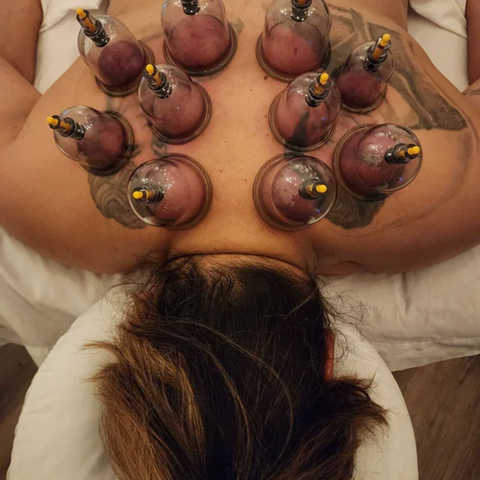
If you’ve had a tense day and you just want the knots in your neck and shoulders to finally let go, you’re in the right place. We hear that a lot in Tempe, and people regularly tell us it’s easy to schedule when they’re at their limit. Cupping therapy treatment can help stubborn, muscular neck and shoulder tightness by lifting the tissue, bringing fresh circulation into those stuck spots, and making it easier for your therapist to release tension. It tends to work best for myofascial tightness and post-workout soreness, not sharp or unexplained pain.
Neck and shoulder knots in Tempe don’t come out of nowhere
Most “knots” are areas of muscle and fascia that are gripping and not sliding well. That’s why you can stretch, roll, and heat your shoulders, and the tight band still feels like it’s glued in place.
We see a lot of neck strain that lines up with real life in Southern Tempe near Mill Avenue and the ASU campus: long laptop days, backpacks that pull your shoulders forward, and that familiar feeling of your upper traps doing everyone else’s job. Add workouts and weekend events, and it stacks up fast.
Tempe heat note: In our hot, arid summers, people often run a little dehydrated without realizing it. Dehydration and heat can make muscles feel more “crampy” and guarded, so recovery work like cupping and therapeutic massage can feel extra helpful after outdoor training days.
And if you bike or run around Tempe Town Lake, it’s common to feel the shoulders creep up toward your ears. That’s a recipe for that one spot that won’t quit.
Why cupping therapy works when deep pressure just irritates the area
Deep pressure can be great. But on neck and shoulder knots, pressing harder sometimes just makes your body brace, and then we’re fighting your nervous system instead of helping it.
Cupping therapy uses suction to gently lift the tissue. Think of it as creating space between layers that feel stuck. That lift tends to increase local blood flow and helps the fascia glide again. Then we can follow up with hands-on work to calm the muscle down and get you moving easier.
We also like cupping for people who have a hard time relaxing when something hurts. We’ve had clients come in so uncomfortable they couldn’t fully settle, then tell us their body responded well and they woke up the next day feeling noticeably better and moving better for yoga and the gym.
“Sam was awesome at getting my shoulder knot that has been there for weeks!”
One of our regulars
What you’ll feel during a 60-minute Cupping Therapy session
- A pulling or “intense but good” suction sensation, especially on dense upper trap and shoulder tissue.
- A quick change in how the area moves, like your shoulder drops an inch and your neck turns easier.
- Temporary cupping marks are common. They look like circles and usually fade over several days.
Is cupping right for your neck and shoulders, or should we skip it?
Cupping is a great fit if your knots feel muscular and “stuck, ” especially if you sit a lot, carry tension in your traps, or you’re active and you feel that post-training tightness in your shoulders and upper back.
We’ll also talk you through what we’re doing and why. People mention they get extra insight and tips to prevent future injuries, and that matters with neck and shoulder tension because it usually comes back when the pattern doesn’t change.
We’ll screen first and keep it honest
Cupping isn’t for everyone. If you have fragile or thin skin, open wounds, active skin infections, recent surgery, or a bleeding or clotting disorder, cupping may not be appropriate. Let us know what’s going on and we’ll choose a safer route.
Why Southern Tempe keeps coming back to Bodiology for knots that won’t budge
We’ve been in Tempe for 5 years, and a big reason people stick with us is simple. We listen, we work thoroughly, and we don’t rush the intake. Clients mention feeling at ease before we even start, and that matters when you’re already tense.
Our therapists are known for getting in and releasing tension in tight, sore muscles. And when cupping is the right tool, we incorporate it alongside therapeutic massage so your neck and shoulders feel looser now, not just “worked on.”
We’re right on the edge of Downtown Tempe near Mill Avenue and the ASU campus, and we see a mix of students, young professionals, and commuters coming in from Chandler, Mesa, Phoenix, Scottsdale, and Guadalupe. If you’re trying to fit recovery into a real schedule, we get it.
Ready to talk through your neck and shoulder tension?
Start with our 60-minute Cupping Therapy session ($100). Tell us where the knot lives, what makes it flare, and what you’ve already tried. We’ll give you a clear plan for that day, and we’ll tell you if cupping isn’t the best fit.
You can reach us at +14804485280 or bodiologylmt@gmail.com. We’re located at 201 E Southern Ave, suite 105, Tempe, AZ 85282-5138.
View massage and cupping servicesCupping Therapy service details (so you know the basics)
Cupping Therapy
Cupping therapy involves creating suction on the skin to promote blood flow, relaxation, and relief of muscle tension. We often pair it with therapeutic massage techniques to help knots soften and movement feel easier.